


The Artemis programme has an easy headline goal — put people back on the Moon and keep them going back — and a much messier reality of slipping schedules, tight budgets and engineering that has to work first time. For the UK, though, it has stopped being a spectator sport. British firms are building hardware, ground stations in Cornwall are being prepared to talk to spacecraft near the lunar south pole, and UK researchers are positioning themselves for samples no laboratory has ever handled.
What Artemis is actually for
Apollo was about arriving and proving it could be done. Artemis is about staying. The target is the lunar south polar region, where permanently shadowed craters hold water ice — useful as drinking water, as radiation shielding and, split into hydrogen and oxygen, as rocket propellant. Learning to live off local resources is the point, because the same skills are what any future Mars effort would depend on.
Alongside the exploration goals sits a set of rules. The Artemis Accords, signed in 2020, set out expectations on transparency, interoperability, emergency assistance and protecting heritage sites such as the Apollo landing zones. The UK was one of the eight original signatories, and the list has since grown to dozens of countries. Signing is not a funding commitment, but it does shape how British organisations are expected to behave when they work on lunar missions.
The mission sequence, stage by stage
It helps to think of Artemis as a series of flights with very different risks attached, rather than one programme with a single date:
- Artemis I flew in November and December 2022. An uncrewed Orion capsule looped around the Moon and splashed down in the Pacific, testing the heat shield, life support and navigation. Engineers later spent a long stretch investigating unexpected char loss on the heat shield — a reminder that even "successful" test flights generate hard questions.
- Artemis II is the first crewed flight: four astronauts on a free-return trajectory around the Moon, with no landing and no stop at the Gateway station. It is planned for 2026, having moved more than once. Expect the date to be driven by readiness rather than the calendar.
- Artemis III is the first crewed landing, aimed at the south polar region. It depends on a commercial lander still in development. Most people following the programme treat 2027 as the earliest plausible window, and few would bet heavily on it.
- Artemis IV onwards adds Gateway, a small station in lunar orbit, assembled in part from European modules, plus a more powerful version of the SLS rocket. These flights are where the sustainable-presence ambition either gains momentum or stalls.
Practical advice for anyone planning around these dates: design your work to be useful whatever the slip. Instruments, software and analysis techniques that have value on their own terms survive a two-year delay far better than a schedule built on a single launch window.
Where the UK fits in
The UK does not build the rocket or the capsule, and it never will at the scale required. Its influence comes through the European Space Agency, which the UK helped found and to which the UK Space Agency is a substantial contributor. ESA's main bargaining chip is the European Service Module — the propulsion and life-support backbone of Orion, assembled by Airbus. In exchange for providing those modules, European astronauts are in line for seats on later Artemis missions, and European industry gets work on Gateway.
That means UK involvement is largely indirect but real. It arrives through ESA contracts, through UK Space Agency funding for specific technologies, and through British scientists competing successfully for instrument and analysis roles. Being inside the tent matters: the UK's ESA subscription is reviewed at ministerial-level budget meetings, and those decisions determine what British teams can bid for over the following years.
Hardware and capability with British fingerprints
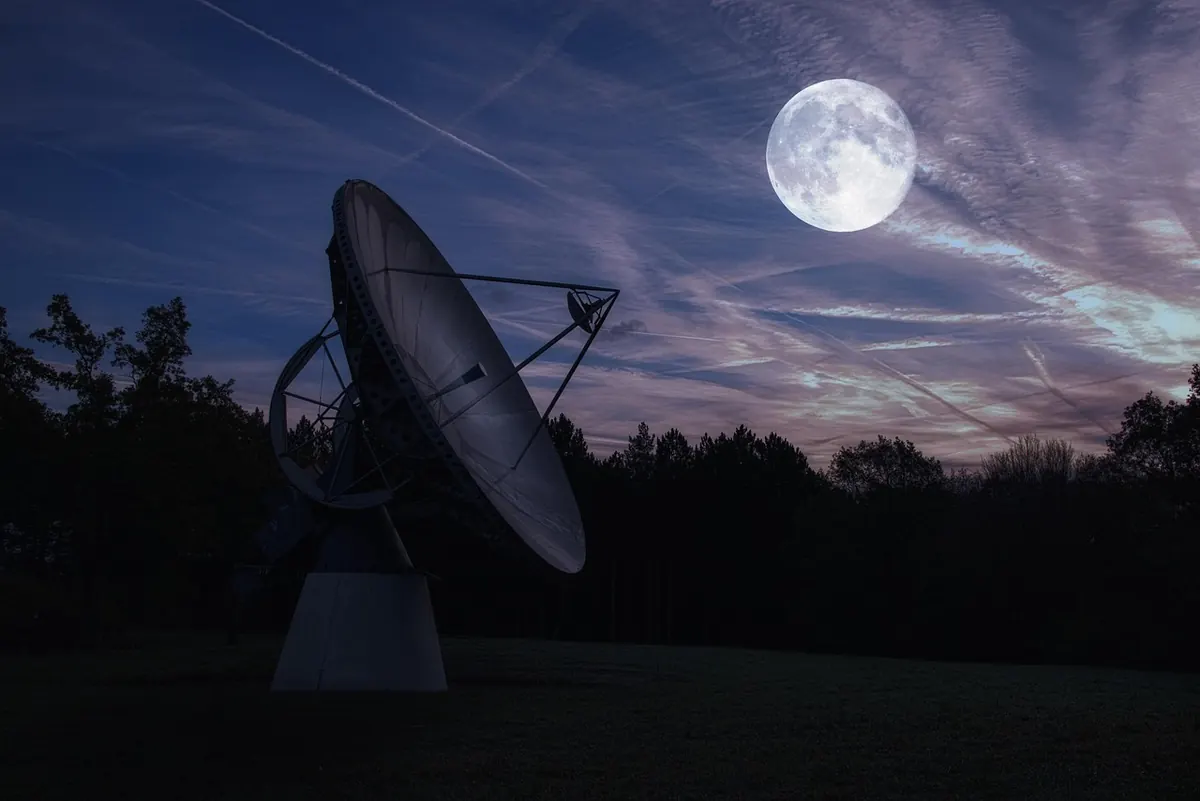
Several areas stand out. Rolls-Royce has been funded by the UK Space Agency to study micro-reactor technology, on the basis that constant power through the lunar night is one of the hard limits on any surface base. Surrey Satellite Technology Ltd has been building a small lunar relay spacecraft, Lunar Pathfinder, to ease the communications bottleneck that makes far-side and polar operations awkward. Goonhilly Earth Station in Cornwall has been upgrading dishes for lunar mission support, which puts useful ground-segment capability on British soil.
Then there is navigation. ESA's Moonlight initiative aims to give the Moon something like a communications and positioning service, and UK teams led some of the early study work. Add ESA's PROSPECT package — a drill and miniature laboratory intended to hunt for volatiles near the south pole, with UK research involvement — and a picture emerges of a country contributing instruments, power, comms and analysis rather than flags and footprints.
The science that comes back
UK planetary science has long experience with Apollo material, and the next generation of samples will be different: polar regolith, possibly containing ice, handled under strict cold-chain conditions. Laboratories at institutions such as the Open University, UCL, Leicester and RAL Space are the kind of places set up for that work, and STFC-funded facilities provide the test chambers and analytical kit.
Sample access is competitive and runs through NASA and ESA processes, so the groundwork happens long before a capsule returns. If you are a researcher, the useful moves are to build a niche in volatile analysis, radiation biology or instrumentation calibration, and to be visible in the relevant ESA working groups rather than waiting for an announcement.