

The first time you spot it, the International Space Station looks almost disappointingly ordinary: one steady white dot, no flashing lights, no sound, sliding quietly from one side of the sky to the other. Then the thought lands. That dot is a laboratory about 400 kilometres above your lawn, a little longer than a football pitch, with people living inside it. You do not need a telescope, a dark-sky site or any special equipment to see it — a garden, a clear evening and a few minutes of accurate timing are enough.
What the space station actually looks like
Forget the photographs. To the naked eye the ISS is a bright, unwavering point of light, closer in appearance to a brilliant star than to anything mechanical. On a good pass it outshines every star in the sky and most of the planets, and it moves at a steady, unhurried pace — roughly the speed of a high-flying aircraft seen from the ground, but with none of the noise or blinking.
A pass usually lasts between two and six minutes. Most run roughly west to east, though the path changes from night to night, and some passes travel north or south. The detail that catches people out is the ending: rather than sinking towards the horizon, the station often fades and vanishes mid-sky as it slips into the Earth's shadow. If a bright moving dot suddenly dies above your roof, that is exactly what you have just watched.
Find out when it will pass over you
Predictions are reliable to the second, so there is no guesswork involved. The most straightforward sources are NASA's Spot the Station service, the long-running Heavens Above website, and phone apps such as ISS Detector. Whichever you use, enter your location precisely — a town name is usually enough, but the station's track shifts noticeably between neighbouring cities, so the closer you get to your own postcode the better.
Each listing gives you a handful of numbers. Learn to read four of them and you can judge in seconds whether a pass is worth putting your shoes on for.
- Time: quoted in local time, so check whether your source has adjusted for GMT or BST.
- Duration: typically two to six minutes. Anything under two is a glancing visit.
- Maximum elevation: the highest point in degrees above the horizon. Ten degrees is a dim crawl near the rooftops; forty degrees or more is a proper overhead pass.
- Direction: usually given as appearing and disappearing points, such as "appears 10° above west, disappears 12° above east".
Which passes are worth going outside for
A pass only works when two things line up: the station must be in sunlight, and your sky must be dark enough to see it. That combination happens mostly in the couple of hours after sunset or before sunrise. In the middle of the night the station is usually in Earth's shadow and simply is not lit.
Height matters most
A pass that peaks at 15 degrees keeps the station low, distant and noticeably dimmer — often washed out by haze or street lighting. A pass above 50 degrees brings it close and bright, and those are the ones worth planning an evening around.
Timing and season
Passes arrive in clusters. You may get a fortnight of good evening passes, then nothing useful for a few weeks, then a run of morning ones. In midsummer, when the sky never gets properly dark at UK latitudes, decent passes become rare — although the ones that do occur can look striking against a deep blue sky. Clear winter evenings, by contrast, often deliver the best viewing of the year, provided you are dressed for it.
Choosing your spot in the garden
The ideal position has an open view in the direction the pass begins and ends, and as little direct light as possible. A back garden with the kitchen light off beats a street corner under a lamp-post every time.
Give your eyes fifteen to twenty minutes to adapt to the dark, and keep your phone screen dimmed — a single glance at full brightness undoes most of that adjustment. A reclining garden chair, or a blanket on the grass with a cushion, saves your neck: the station can pass almost overhead, which is uncomfortable to follow while standing. Binoculars are not much help with the station itself, though they will show you a few more stars while you wait.
Watching a pass, step by step
- Check the prediction earlier in the day, then again an hour before it is due in case of updates.
- Go outside five minutes early, with your eyes already adjusting to the dark.
- Face the direction the station will appear from, and pick a landmark — a chimney, a treetop — to anchor your view.
- Scan that part of the sky for a bright, steady dot that is clearly moving against the stars.
- Follow it across without turning your head too quickly; the movement is slower than you expect.
- Note where it fades. That spot confirms what you saw, and helps you plan the next attempt.
One warning while you are looking up: never stare at the Sun. If you ever try to catch the station crossing the solar disc, that requires a proper certified solar filter — no exceptions, and not sunglasses.
Telling the station apart from everything else
Aircraft are the usual source of confusion, but they give themselves away: flashing strobes, red and green navigation lights, and audible engine noise if they are low. Venus is bright, but it does not move — if you look away and look back and it is in the same place, it is a planet. Ordinary satellites are dimmer and drift more slowly, meteors streak across in a second or two, and a newly launched train of satellites appears as a string of evenly spaced dots. The station is the bright one that crosses the whole sky at a steady pace, never blinking, never making a sound.
Your first attempt, in practice
Pick the next pass that peaks above 40 degrees, set an alarm for five minutes before it starts, and head outside with a coat and a chair. Face the stated direction of approach, resist the urge to check your phone, and give it a full minute past the predicted time. If cloud rolls in or you miss it entirely, do not worry — passes come in runs, so there is almost always another within a few days. The second viewing is usually better than the first, because by then you know precisely what you are looking at.
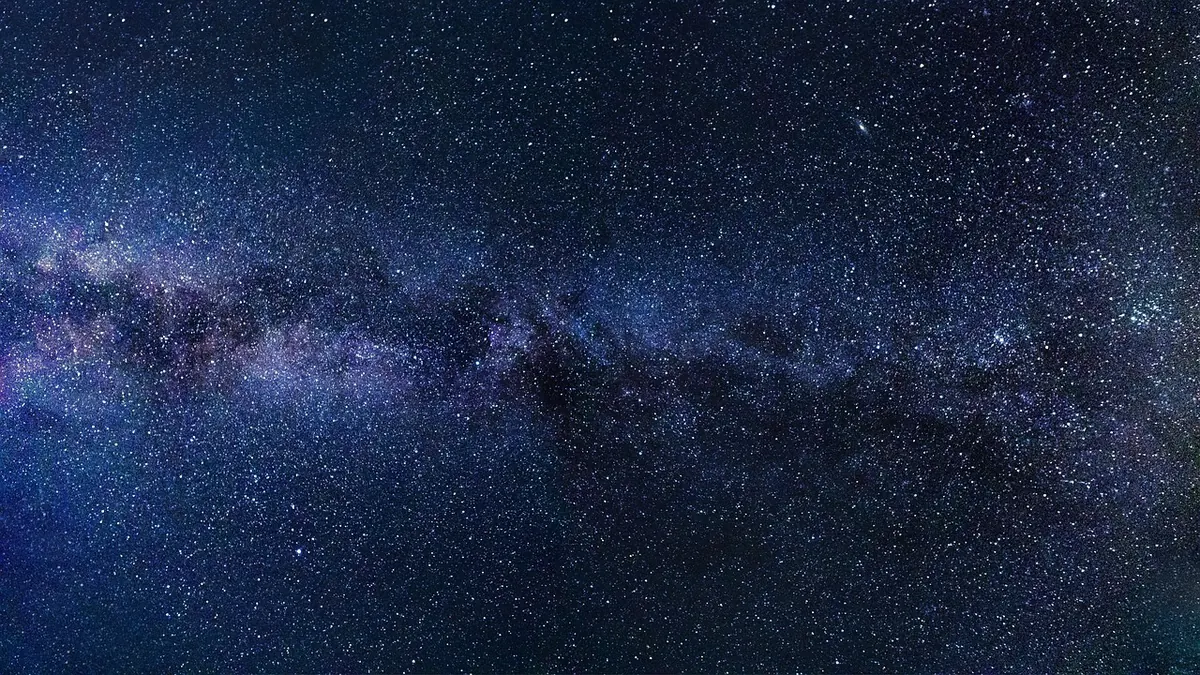
Photo: Felix-Mittermeier / Pixabay